Practical guides
Plan A alternatives for decarbonisation and reporting

Paula Otero
Environmental and Sustainability Consultant

The closest alternatives to Plan A in August 2026 are Persefoni, Sweep, Normative, Watershed, Greenly, Cozero and Manglai. Plan A is a German carbon accounting, CSRD reporting and decarbonisation platform aimed at mid to large companies. Teams usually start looking elsewhere for three reasons: local language and support, fit with the Spanish MITECO carbon footprint registry, and the need to cover environmental areas beyond carbon.
What is Plan A and who does it work well for?
Plan A is a German company selling carbon accounting, sustainability reporting and decarbonisation planning software. Its site groups the product into three blocks: measuring the corporate carbon footprint, producing stakeholder ready reports, and designing reduction actions. On top of that sits a module called CSRD Manager, announced in November 2024, which walks users through the reporting process step by step, manages data collection and lets external auditors take part while the report is being built.
The frameworks the company itself claims to cover are the GHG Protocol, CSRD and ESRS, CSDDD, the EU Taxonomy, CBAM, SBTi, the UK SDR regime and US SEC climate disclosure rules. Plan A is a certified B Corp, and its corporate carbon footprint methodology was certified by TÜV Rheinland in 2021 following the GHG Protocol.
Commercially the product comes in three tiers: Essential, Pro and Enterprise. API access and a dedicated customer success manager start at Pro, and the Supply Chain+ module with 500 suppliers included is Enterprise only. Plan A does not publish prices on its website, so every deal starts with a call.
It is a good fit when the company is mid sized or large, has its own sustainability team, works day to day in English or German, and wants carbon accounting plus European reporting inside one tool.
Why do companies look for Plan A alternatives?
None of these reasons say the product is bad. They are fit problems, and it is cheaper to spot them before signing.
- Product and content language. As of August 2026 the Plan A website is published in English, German and French. There is no Spanish version.
- MITECO carbon footprint registry. Plan A does not document specific support for the Spanish registry or for its Calculo, Reduzco and Compenso seals, which is the first box many Spanish companies have to tick.
- Company size. The positioning and customer list point to mid and large enterprises. A 40 person company that only needs scope 1 and 2 usually finds the product oversized.
- Carbon only scope. If you also have to manage waste, water or product footprints, you either add another tool or move to a vendor that covers all of it.
- A changed regulatory perimeter. With Directive (EU) 2026/470, published in the Official Journal on 26 February 2026, CSRD now applies to companies with more than 1,000 employees and more than 450 million euros in turnover, with first reports covering financial years starting on or after 1 January 2027. Many mid sized firms have dropped out of scope and no longer need a full ESRS module.
Plan A alternatives compared
All data taken from each vendor's own website in August 2026. None of these tools publishes list prices, with the single exception noted for Persefoni.
| Tool | Best for | Frameworks it claims to cover | Website languages | Public pricing |
|---|---|---|---|---|
| Plan A | Mid and large European companies wanting carbon and CSRD in one tool | GHG Protocol, CSRD and ESRS, CSDDD, EU Taxonomy, CBAM, SBTi, UK SDR, SEC | English, German, French | No |
| Persefoni | Companies and financial institutions that need assurance grade reporting | GHG Protocol, CSRD, TCFD, SASB, PCAF, SBTi, California SB 253 and SB 261 | English, German, French, Japanese | Free Pro plan, Advanced on request |
| Sweep | Multi entity groups and long supply chains | GHG Protocol, CSRD, ISSB, GRI, CDP, PCAF, SASB, California SB 253, UK SRS | English, French, German | No |
| Normative | European companies prioritising data automation and a named advisor | GHG Protocol, CSRD, CBAM, CDP, SBTi | English | No |
| Watershed | Large corporates and financial services reporting under several regimes | CSRD, California SB 253 and SB 261, CDP | English, German, French | No |
| Greenly | SMEs and mid market companies starting out and wanting guidance | SBTi, CSRD, CDP, ISSB, ISO 14067, EUDR, CARB | English, German, French | No |
| Cozero | Companies pulling carbon into financial controlling, and logistics | GHG Protocol, CSRD, CDP, SBT, GLEC Framework | English, German | No |
| Manglai | Companies in Spain and Latin America needing MITECO plus several environmental areas | GHG Protocol, ISO 14064, ISO 14083, ISO 14046, MITECO, CSRD, GLEC Framework, SQAS, PEF | Spanish, English, Portuguese, French, Italian, Catalan, German | No, three quoted plans |
Two caveats when reading the frameworks column. The TCFD is no longer a free standing framework: the task force was disbanded in 2023 and its recommendations are embedded in IFRS S2, just like the SASB Standards, which the ISSB now maintains. And after the Omnibus revision the CSDDD will not apply until 26 July 2029, and only to EU companies with more than 1,500 million euros in turnover and 5,000 or more employees, so for most of the market it is not a buying criterion today.
Persefoni
Persefoni is a US carbon accounting platform with two lines of business, corporate and financial services. Its core promise is emissions reporting good enough for external assurance, and the site explicitly talks about assurance grade GHG emissions reporting. It covers scopes 1, 2 and 3, financed emissions under PCAF, supplier engagement and decarbonisation management.
It also does something unusual in this market: it publishes two plans, and the Pro tier is free, with no trial period and no time limit, aimed at companies with low to medium operational complexity. The Advanced tier is paid and unpriced publicly. Its AI layer includes a conversational copilot and statistical anomaly detection across large datasets.
It is the strongest Plan A alternative when the reader of your report is an auditor, an investor or a financial regulator. Its website is published in English, German, French and Japanese, not Spanish.
Sweep
Sweep is headquartered in Paris and London, was founded in 2020 and is a certified B Corp. Its focus is managing ESG and carbon data at scale rather than just calculating a number. The platform is organised into five blocks: carbon accounting, ESG disclosure, value chain engagement, audit and assurance, and business intelligence.
What separates it from Plan A is the data model. Sweep describes a flexible structure that fits multiple entities, business units and geographies, with complete data lineage, immutable audit trails and governance controls. It mentions integration with ERP, procurement and HR systems, though it names no specific vendors.
Pick Sweep over Plan A if the real problem is consolidating dozens of subsidiaries or thousands of suppliers, and the data has to survive an assurance review. It does not publish prices, and its site runs in English, French and German.
Normative
Normative is a European carbon accounting platform that claims more than 349,000 emission factors and automates data ingestion to produce audit ready emissions records. It covers scopes 1, 2 and 3, product carbon footprints, supply chain engagement, SBTi, CSRD and CBAM, with independent verification by TÜV SÜD.
Its stated differentiator is service rather than technology: every account includes a named, GHG Protocol certified climate strategy advisor instead of a help desk. The commercial offer splits into Essential and Premium, with no public prices.
It makes sense against Plan A when the bottleneck is missing internal expertise and you want a specific person accountable for the methodology. Its website is English only, and it does not document support for the Spanish MITECO registry.
Watershed
Watershed positions itself as an enterprise sustainability platform, citing Fortune 500 customers, major US banks and private equity firms. It structures work in five stages: data collection with OCR, cleaning and standardisation with AI agents, emission factor mapping and measurement, analysis, and report drafting.
Its site explicitly names CSRD and the California climate laws SB 253 and SB 261, and it is accredited as a gold tier CDP software solutions provider. It does not publish prices.
Compared with Plan A, Watershed fits better if your group reports in Europe and the United States at the same time and data volumes are very high. For a mid sized Spanish company it is usually oversized, and the site is published in English, German and French.
Greenly
Greenly is a French origin carbon management platform that claims more than 3,500 customers and works from SME up to enterprise. Its site lists carbon assessment, life cycle assessment, supplier engagement, ESG management and reporting, and decarbonisation planning, with an AI assistant called EcoPilot.
Frameworks listed include SBTi, CSRD, CDP, IFRS and ISSB, the Digital Product Passport, ISO 14067, EUDR and CARB. It publishes three plans by name, GHG Report Compliance, Climate Action Ready and Net Zero Contributor, but no amounts.
It is a reasonable Plan A alternative for smaller companies that want guidance bundled with the software. Its site is in English, German and French, with no Spanish version, and it does not mention the MITECO registry.
Cozero
Cozero is a German platform that treats carbon as a controlling line item: its own tagline is that carbon belongs on the balance sheet. It is built to talk to CFOs as well as sustainability teams, and splits into three modules: Log for scope 1, 2 and 3 accounting, Act for scenario modelling and return on decarbonisation investment, and Share for regulatory reporting.
It states alignment with the GHG Protocol, CSRD, CDP, science based targets and the GLEC Framework for logistics emissions, with dedicated solutions for logistics and transport. It does not publish prices and its site runs in English and German.
Choose it over Plan A if your priority is making the financial case for reduction investments, or if you are a transport company that needs logistics methodology.
Manglai
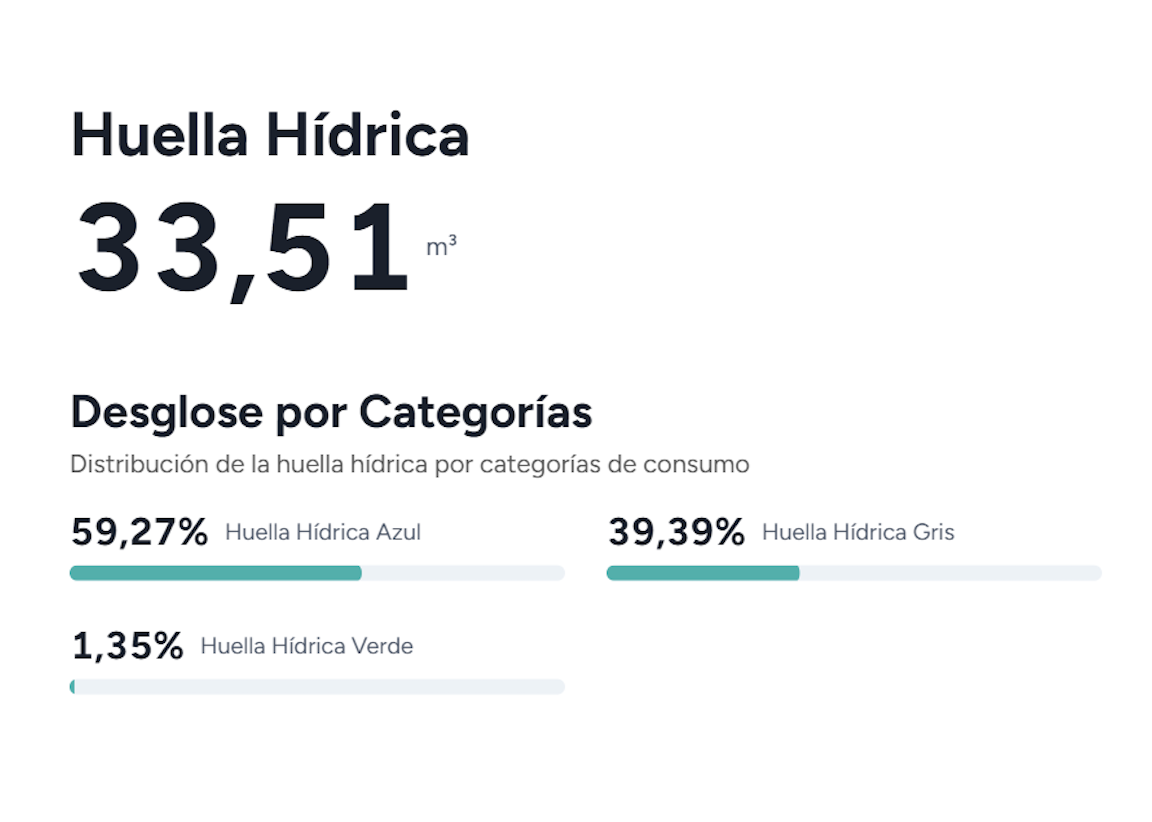
Manglai is a Spanish environmental management platform with clients in 70 countries, more than 30,000 users and 25 million tonnes of CO2 equivalent under management. Unlike the platforms above it is not carbon only: it covers carbon footprint, water footprint, waste management, product footprint and service footprint for logistics.
On frameworks it states GHG Protocol, ISO 14064, ISO 14083, ISO 14046, the GLEC Framework, SQAS, PEF and CSRD, plus registration in the Spanish MITECO carbon footprint registry, which is the most practical difference against Plan A for a Spanish company. The product is available in Spanish, English, Portuguese, French, Italian, Catalan and German, and its Starter, Pro and Enterprise plans are quoted as annual subscriptions with no list price.
It is the logical option if you operate in Spain or Latin America, need the MITECO seal and want several environmental areas in one place. It is not the option if your primary filing is with the US SEC or you need PCAF financed emissions.
How to pick the right Plan A alternative
Work through these six criteria in this order.
- The obligation you actually have to meet. Spain's Royal Decree 214/2025, which requires companies in scope to calculate their scope 1 and 2 footprint and publish a reduction plan, is a different problem from CSRD after the Omnibus package. Buy against the obligation, not the feature list.
- Calculation standard and verifiability. Check whether the methodology aligns with the GHG Protocol, with ISO 14064-1:2018, or with both. If that distinction is not clear to you, read the differences between the GHG Protocol and ISO 14064-1 before comparing vendors.
- Real scope 3 depth. Ask which of the 15 GHG Protocol scope 3 categories the tool genuinely covers and with what method, not just whether it supports scope 3 in general.
- Where the data comes from. Invoices, ERP, API or manual upload. A platform that only accepts templates leaves you with the work you already had.
- Language, support and time zone. If your sustainability lead works in Spanish and audits happen in Spain, English only support on Central European hours adds real friction.
- Total first year cost. Licence, implementation, consulting hours and external verification. Since almost nobody publishes prices, always ask for the breakdown in writing.
When does staying with Plan A make sense?
Staying is the right call in several situations. If your company reports under CSRD and has already configured CSRD Manager with its double materiality assessment, migrating mid cycle costs more than it saves. If your parent company is German or your team works in English, language stops being an issue. And if you need EU Taxonomy, CSDDD, CBAM and SEC coverage at once, few platforms list that full spread. Switching only pays off when there is a structural mismatch, not when one feature is missing.
Frequently asked questions
Does Plan A publish its prices?
No. Its offerings page describes three tiers, Essential, Pro and Enterprise, with the features of each, but points visitors to book a call for the amount. None of the direct competitors analysed publishes list pricing either, with the exception of Persefoni's free Pro plan.
Can Plan A be used to register with the Spanish MITECO carbon footprint registry?
Plan A does not document specific support for the Spanish registry or for its Calculo, Reduzco and Compenso seals. You could use a GHG Protocol aligned calculation as the basis, but preparing the file and the MITECO templates would sit outside the tool.
Which Plan A alternative is closest in functionality?
Sweep and Normative are closest in approach, European carbon accounting plus CSRD reporting. Persefoni is similar as a product but leans on assurance and financed emissions. Watershed targets a larger corporate profile.
Do I still need CSRD software after the Omnibus package?
It depends on size. Directive (EU) 2026/470 narrowed the obligation to companies with more than 1,000 employees and more than 450 million euros in turnover, with first reports covering financial years starting on or after 1 January 2027, and it set limited assurance as the definitive level, removing the planned move to reasonable assurance. Many mid sized companies are out of scope but still receive questionnaires from customers and banks.
How much does it cost to migrate between carbon platforms?
There is no reliable public figure, because it depends on how much history you have to recover and whether the emission factors used are traceable. Before migrating, require your current vendor to export activity data, applied factors and the versions of the databases used.
If you are a company operating in Spain that needs to calculate its footprint, register it with MITECO and keep it going year after year across several environmental areas, start with the Manglai carbon footprint calculator and compare the result with whatever the platforms on this list quote you.
Paula Otero
Environmental and Sustainability Consultant
About the author
Biologist from the University of Santiago de Compostela with a Master’s degree in Natural Environment Management and Conservation from the University of Cádiz. After collaborating in university studies and working as an environmental consultant, I now apply my expertise at Manglai. I specialize in leading sustainability projects focused on the Sustainable Development Goals for companies. I advise clients on carbon footprint measurement and reduction, contribute to the development of our platform, and conduct internal training. My experience combines scientific rigor with practical applicability in the business sector.
Content
Companies that trust us















Practical guides
New Construction Products Regulation (EU) 2024/3110: a 2026 guide
The construction sector in Europe is entering a new regulatory phase. The new Construction Products Regulation , Regulation (EU) 2024/3110 , redefines ...

Practical guides
Manglai vs Dcycle: a comparison of sustainability software
The Spanish sustainability software market is growing fast. With regulations such as the CSRD and the obligations of Spain's MITECO carbon footprint r ...

Practical guides
SDG guide for Mexican companies: aligning your strategy with the 2030 Agenda
Sustainability is a strategic necessity for companies that want to stay competitive and resilient. In Mexico, the Sustainable Development Goals (SDGs) ...
Guiding businesses towards net-zero emissions through AI-driven solutions.
Product & Pricing
What is Manglai
Features
SQAS
GLEC
GHG Protocol
ISO-14046
ISO-14064
Miteco certification
CSRD
CSDDD
Digital Product Passport
EINF
Prices
Customers
Partners
Solutions by role
Environmental consulting
ESG management solutions
Financial directors
General directors
HR managers
Operations directors
Quality and environment directors
Senior management
Solutions for investment funds
Supply chain managers
Sustainability managers
Transport responsible
© 2026 Manglai. All rights reserved