Water footprint
Water neutrality: is it an achievable goal for industry in Spain?

Andrés Cester
CEO & Co-Founder

Water neutrality has become one of the most talked-about concepts in environmental management across Europe. Regulatory pressure, water stress, and competitiveness have placed water at the same level as carbon as a critical sustainability vector.
It is worth being clear from the outset that water neutrality is a voluntary objective that is still under discussion: there is no single, universally accepted standard, and several experts warn that it cannot be understood as 'zero water consumption' or resolved through offsets alone. In this article we explain what it means, what it requires of Spanish industry, which methodologies apply, and which strategies make it possible to move towards this objective credibly.
What is water neutrality?
Water neutrality is the state in which an organisation reduces its water consumption and impact as far as possible and offsets the remainder through reuse, regeneration, and replenishment measures in the basin. In practice it rests on four pillars:
- Comprehensive measurement of water use: direct and indirect consumption, returns, and losses.
- Demonstrable reduction of consumption through technologies and operational improvements.
- Reuse and regeneration of water to approach a net neutral balance.
- Water replenishment in verifiable projects in the same basin when internal reduction is not enough.
The hierarchy matters: water offsetting is only legitimate after reducing and reusing as much as possible, not as a shortcut to keep consuming the same.
Why should Spanish industry address water?
Spain is one of the European countries most exposed to scarcity. According to MITECO, around 74% of the territory is susceptible to desertification (arid, semi-arid, or dry sub-humid areas), and climate change points to lower water availability in much of the country's river basins, especially in the south and the Mediterranean arc. Added to this is growing pressure from reporting regulation: the CSRD and the ESRS E3 (water and marine resources) standard require companies in scope to report on consumption, risks, and mitigation plans related to water.
How water neutrality is calculated
Moving towards neutrality requires a rigorous methodology to measure, reduce, and offset water use. Knowing total consumption is not enough: you have to understand how the operation interacts with the basin. These are the steps to achieve a neutral water balance in industrial settings:
1. Comprehensive measurement of water use
A thorough water inventory quantifies the water entering the facility, the water used in processes, the water reused internally, and the water returned to the environment, including losses from leaks and evaporation. Accuracy at this stage is decisive: an initial error distorts the whole balance.
2. Basin water risk assessment
Next, the hydrological context of the surrounding area is analysed to assess water risk: availability and quality of the resource, competition with other uses, and climate projections. Tools such as the Aqueduct Water Risk Atlas help place each plant in its basin context.
3. Selection of a representative baseline year
Defining a baseline year that faithfully reflects the consumption pattern ensures that any subsequent reduction is measurable, verifiable, and comparable.
4. Identification of internal reduction opportunities
With the full diagnosis, the company identifies measures to reduce its water consumption: closed loops, operational improvements, sensors, blowdown optimisation, and regeneration systems. Every cubic metre reused reduces the volume of abstraction.
5. Reuse and regeneration of water at the plant
Internal regeneration closes water cycles and reduces dependence on external sources. Combining tertiary treatment, reverse osmosis, and recirculation tends to offer relevant reductions, especially in sectors with stable processes such as electronics, automotive, or food.
6. External water replenishment
When the plant has applied all viable improvements and still does not reach neutrality, it can turn to water replenishment projects (wetland restoration, aquifer recharge, controlled infiltration). These are only valid if they are carried out in the same basin where the company operates, which clearly distinguishes water replenishment from carbon offsetting.
Is water neutrality really viable in Spain?
Viability depends greatly on the sector and, above all, on the basin. Sectors with stable processes and water cycles that are easy to close (automotive, electronics, part of the beverage industry with advanced investments in regeneration) have high recirculation potential and therefore more room to approach neutrality.
Sectors such as food, textiles, chemicals, or cement have intermediate viability because of the complexity of their discharges and seasonality. And activities such as intensive agriculture, mining, or primary metallurgy face greater technical limitations. In all cases, however, significant reductions in consumption are possible that already deliver environmental and operational benefits, even if full neutrality is not always achievable in the short term.
Practical strategies to advance towards water neutrality
Companies starting on this path should put in place a continuous measurement system that makes it possible to detect leaks and abnormal consumption. It is equally essential to map water risk by basin: a company's vulnerability depends largely on where it is located, not just on its sector.
Another key recommendation is to design a water roadmap with intermediate targets, the investments needed, and the applicable technologies. In parallel, integrating water into sustainability reporting (CSRD and ESRS E3) provides transparency for auditors and stakeholders. Finally, any water strategy should be communicated while avoiding greenwashing: you can read more in our guide on how to communicate your sustainability strategy and avoid greenwashing.
Water neutrality: a demanding but strategic objective
Water neutrality is an ambitious objective, viable to differing degrees depending on the sector and the basin, and always more robust when it prioritises real reduction over offsetting. Companies that start today reduce risks, optimise costs, and strengthen their competitive position. In a country increasingly exposed to water stress, managing water rigorously is a condition for operating stably over the long term.
Frequently asked questions about water neutrality
How long does it take a company to achieve water neutrality?
It depends on the sector, the starting point, and the level of investment. It is usually a multi-year process that combines measurement, gradual reduction, and finally replenishment in the basin.
Is water neutrality mandatory?
There is no explicit legal obligation to be water neutral. There are, however, reporting obligations that push in that direction, such as the CSRD, the ESRS (in particular ESRS E3) and, for certain activities, the EU Taxonomy.
Is water replenishment the same as carbon offsetting?
They are analogous concepts, but with one essential difference: water replenishment must be carried out in the same basin where the impact occurs, because water is a local resource. Carbon offsetting, on the other hand, is global.
How much does a water neutrality project cost?
It varies greatly depending on the size and complexity of the plant and the scope of the investments in regeneration and replenishment, so it is best to assess it case by case based on the water diagnosis.
To measure your water footprint and design a roadmap towards neutrality with auditable data, discover Manglai's water footprint module.
Andrés Cester
CEO & Co-Founder
About the author
Andrés Cester is the CEO of Manglai, a company he co-founded in 2023. Before embarking on this project, he was co-founder and co-CEO of Colvin, where he gained experience in leadership roles by combining his entrepreneurial vision with the management of multidisciplinary teams. He leads Manglai’s strategic direction by developing artificial intelligence-based solutions to help companies optimize their processes and reduce their environmental impact.
Content
Companies that trust us
















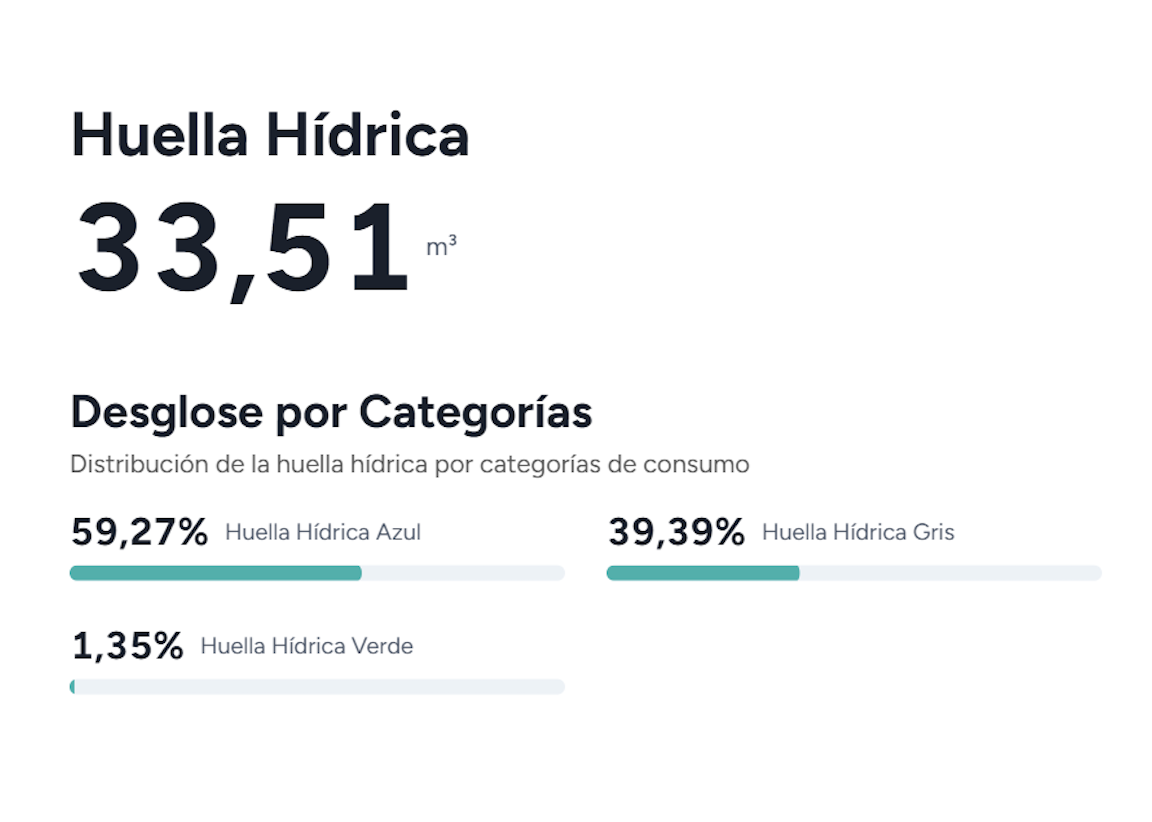



Water footprint
Industrial water reuse: strategies, technologies and regulation
Industrial water reuse means treating a plant's wastewater so it can be used again for new purposes instead of being discharged. That additional treat ...

Water footprint
Water stress: what it is, causes and how it affects companies
Water stress occurs when a territory's water demand approaches or exceeds the volume of water available, or when its quality limits its use. Technical ...
Water footprint
Corporate water footprint: regulations, calculation and tools
If your company has been asked whether it's required to report its corporate water footprint , the short answer is: it depends on which regulation app ...
Guiding businesses towards net-zero emissions through AI-driven solutions.
Product & Pricing
What is Manglai
Features
SQAS
GLEC
GHG Protocol
ISO-14046
ISO-14064
Miteco certification
CSRD
CSDDD
Digital Product Passport
EINF
Prices
Customers
Partners
Solutions by role
Environmental consulting
ESG management solutions
Financial directors
General directors
HR managers
Operations directors
Quality and environment directors
Senior management
Solutions for investment funds
Supply chain managers
Sustainability managers
Transport responsible
© 2026 Manglai. All rights reserved