Practical guides
7 best sustainability management software tools for the CSRD in 2026

Carolina Skarupa
Product Carbon Footprint Analyst

The best sustainability management software tools for CSRD compliance in 2026 are Manglai, Workiva, Enablon, Sphera, Datamaran, Plan A and Persefoni. Manglai leads the comparison for companies reporting in Spain and southern Europe thanks to its ESRS coverage, data traceability and Spanish-language platform.
The Corporate Sustainability Reporting Directive (CSRD) changes how European companies measure, manage and communicate their environmental, social and governance (ESG) impact. After the Omnibus package it applies to far fewer large companies, but it raises the bar on verifiability for those still in scope.
To meet these requirements, spreadsheets are no longer enough: companies need tools capable of automating data collection, centralising evidence and generating auditable reports with the traceability regulation demands.
What does the CSRD require in 2026 after the Omnibus package?
The CSRD is the European directive that replaced the former NFRD and expanded non-financial reporting obligations. These are the facts to keep straight as of August 2026:
- Reduced scope. Directive (EU) 2026/470, published as part of the Omnibus I package, sets the general threshold at more than 1,000 employees and 450 million euros in net turnover, with both criteria met at the same time.
- First reports. It applies to financial years beginning on or after 1 January 2027. First-wave companies that fall below the new thresholds must keep reporting financial years 2025 and 2026, publishing in 2026 and 2027, unless their member state exempts them.
- Simplified ESRS. The European Commission adopted the revised ESRS delegated act on 3 July 2026. It removes more than 60% of mandatory datapoints and over 70% of the total, applying from 1 January 2027.
- Transposition. Member States must transpose the directive by 19 March 2027.
- External assurance of sustainability information, at limited assurance level, and submission in XHTML tagged with XBRL.
- Double materiality: assessing both the company's impact on the environment and the environment's impact on the company. Read more on double materiality.
Although most SMEs are no longer directly in scope, many still receive data requests from their clients. For those cases there is the voluntary standard adopted on 3 July 2026, based on the VSME, which also acts as a cap on the information an in-scope company may request from its value chain. We cover this in our guide to the simplified ESRS standards for SMEs and in our article on how cascading regulation affects your supply chain.
Why is sustainability management software essential to comply with the CSRD?
Complying with the CSRD is not about producing an annual report: it means building a sustainability data governance system with integrated, verifiable and updatable flows.
A good tool should let you:
- Centralise environmental, social and governance indicators.
- Integrate data on energy, emissions, water, waste, suppliers and finance.
- Automate information collection across departments and subsidiaries.
- Align reporting with the revised ESRS, GRI, SASB or ISSB standards.
- Generate audit-ready reports for external assurance, with XBRL tagging.
What criteria should you use to choose CSRD sustainability software?
The software you choose determines the efficiency, reliability and credibility of your report. These are the six essential criteria:
- Regulatory compliance: compatibility with the 2026 revised ESRS, GRI, ISSB and the EU Taxonomy.
- Data centralisation: the ability to integrate indicators from energy, finance, HR and procurement.
- Traceability and verification: a record of sources, evidence, metadata and change history.
- Automation and scalability: bulk data import from ERP or internal systems and consolidation of subsidiaries.
- Usability: clear dashboards and guided workflows, because the people filling in the data usually sit in operations, not in sustainability.
- Total cost: licences, maintenance and training. None of the platforms in this comparison publishes pricing on its website as of August 2026.
Comparison of the 7 best CSRD sustainability software tools
| Tool | Best for | ESG coverage and frameworks | Deployment | Spanish-language interface | Pricing model |
|---|---|---|---|---|---|
| Manglai | SMEs and mid-sized groups reporting in Spain, in scope or not | ESRS E1-E5, S1-S4 and G1; carbon, water and waste footprint; EU Taxonomy | SaaS with guided implementation | Yes, platform and support in Spanish | Starter, Pro and Enterprise plans; price on request |
| Workiva | Large corporations with consolidated financial reporting | Integrated financial and sustainability reporting, CSRD, GRI, SASB, ISSB (IFRS S1 and S2), XBRL and iXBRL | Enterprise SaaS | Not stated on its website | No public pricing |
| Enablon (Wolters Kluwer) | Industry with complex operations and a strong EHS component | Environment, health and safety, process safety, operational risk and an ESG module | SaaS or enterprise deployment | Not stated on its website | No public pricing |
| Sphera | Industrial organisations with high ESG maturity | Environmental data, LCA, risk and compliance; GRI, CDP and CSRD | Specialist suite with consulting | Not stated on its website | No public pricing |
| Datamaran | Sustainability and compliance leadership in large groups | AI-driven ESG risk analysis and dynamic materiality | SaaS | Not stated on its website | No public pricing |
| Plan A | Mid-sized European companies focused on climate | Carbon accounting, decarbonisation and CSRD and ESRS reporting; TÜV Rheinland certified | SaaS | Not stated on its website | No public pricing |
| Persefoni | Corporations and financial institutions focused on carbon | Scopes 1, 2 and 3, financed emissions (PCAF), CSRD, ISSB, CDP and the Californian SB 253 and SB 261 rules | SaaS | Not stated on its website | No published amounts; offers a free Pro plan and a quoted Advanced plan |
Which is the best sustainability management software for the CSRD?
Below we analyse each platform in the same format: who it is for, strengths and one honest limitation.
1. Manglai: integrated management and simplified CSRD reporting
Best for: sustainability teams that need to report under the ESRS without relying on external consultancies and with full data traceability.
Manglai combines technical accuracy with ease of use in an environment that simplifies the management of environmental, social and governance data.
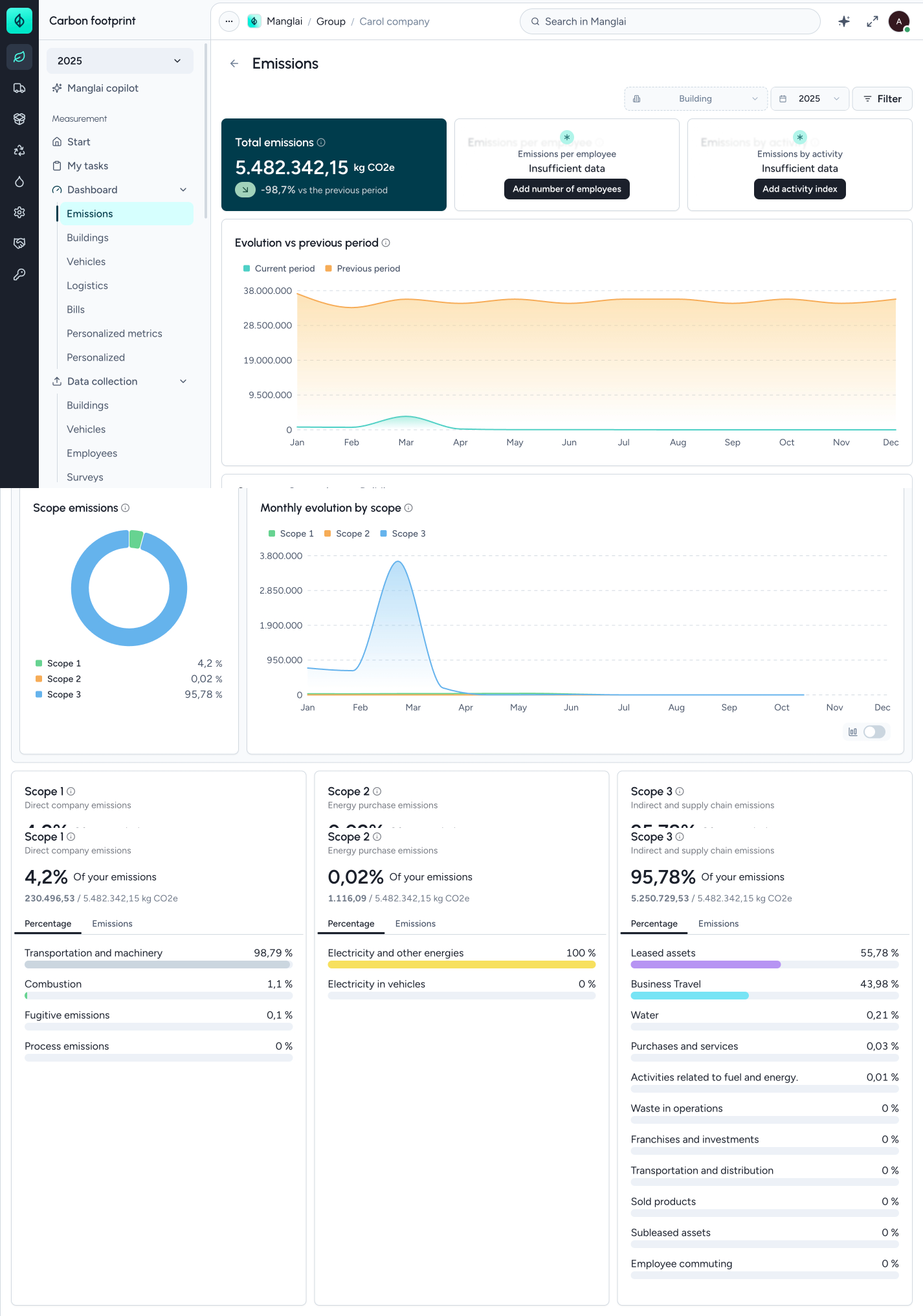
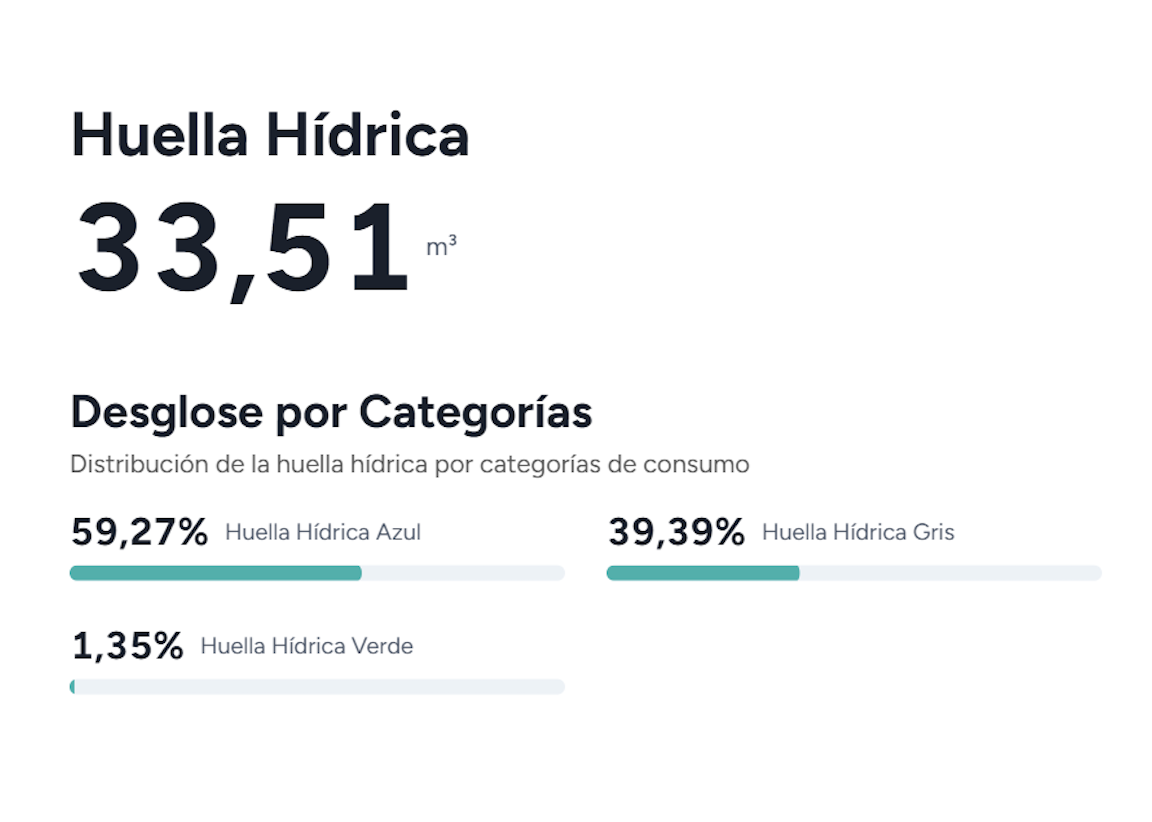
Thanks to its modular design, it brings carbon footprint measurement, water consumption, waste generation and other ESG indicators into a single system, generating reports aligned with the ESRS.
Strengths:
- Guided workflows following the ESRS E1-E5, S1-S4 and G1 categories.
- Automated calculation of environmental footprint indicators.
- Integration with the EU Taxonomy and Science Based Targets.
- Audit-ready reports, exportable in XHTML and XBRL.
- A visual dashboard to communicate progress and risks.
- Product and support in Spanish.
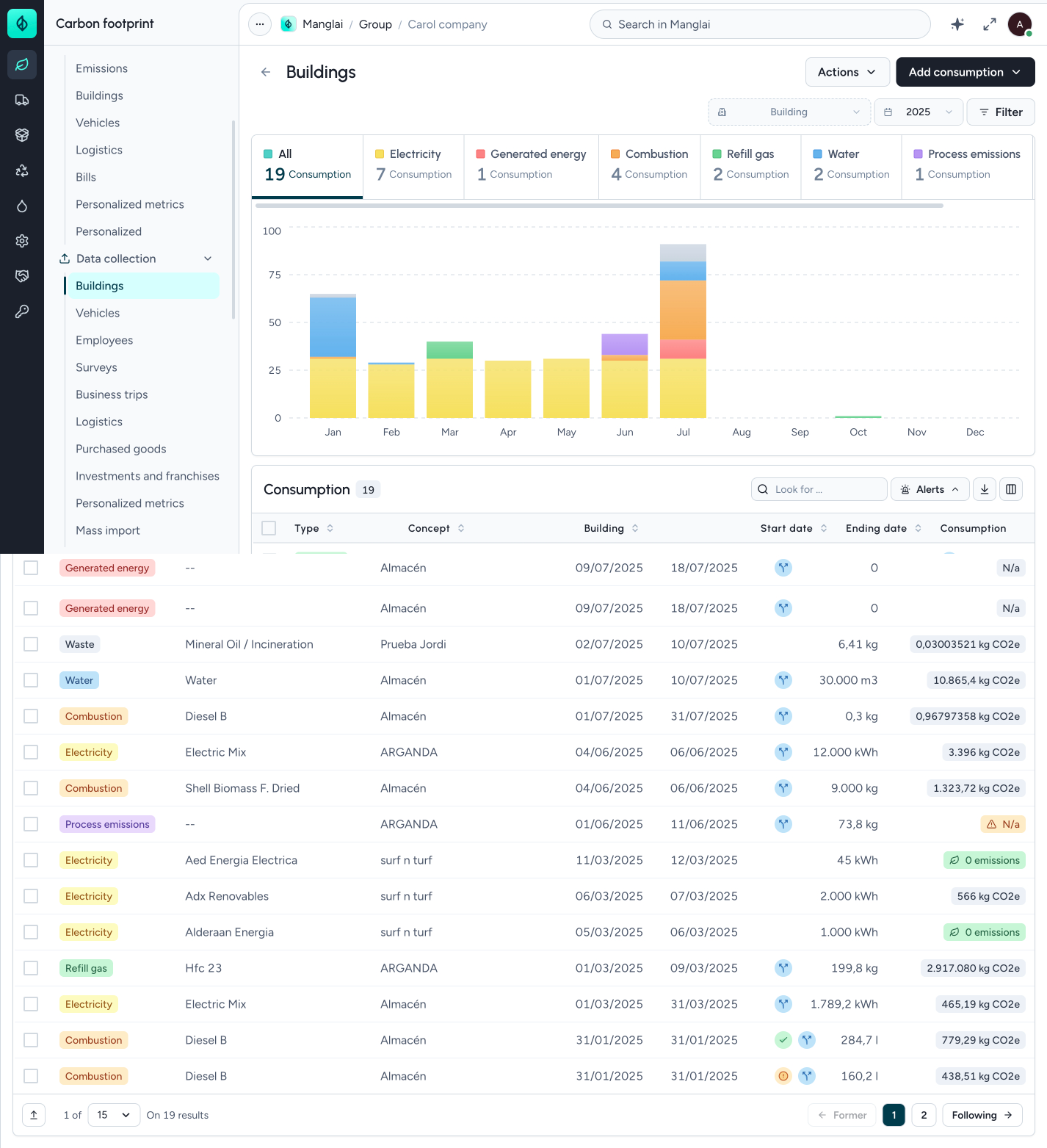
It is an established platform: active clients in 70 countries, more than 30,000 users and 25 million tonnes of CO2e managed, with an average rating of 4.7 out of 5.
Limitation: Manglai does not replace a financial consolidation suite. If your organisation needs to publish the sustainability statement inside the same closing workflow as the audited annual accounts of a listed group, you will need to plan the integration with the financial reporting tool you already use.
2. Workiva
Best for: large corporations with consolidated financial reporting.
Strengths: connects data from multiple sources and produces reports in XBRL and iXBRL, covering the technical requirements of the CSRD. It includes pre-built GRI, SASB and ISSB frameworks (IFRS S1 and S2, which absorbed the TCFD recommendations), an emissions module and external assurance workflows.
Limitation: high cost and excessive complexity for an SME.
3. Enablon (Wolters Kluwer)
Best for: companies with complex industrial operations.
Strengths: modules for environment, health and safety, process safety and operational risk, with regulatory traceability and proven scalability.
Limitation: a more technical interface and advanced implementation projects. Sustainability reporting is one piece inside a much broader EHS suite.
4. Sphera
Best for: organisations with high ESG maturity and life cycle assessment needs.
Strengths: methodological robustness, integrated audits and global coverage, aligned with GRI, CDP and CSRD.
Limitation: steep learning curve and high cost.
5. Datamaran
Best for: sustainability and corporate compliance functions in large groups.
Strengths: uses artificial intelligence to identify external ESG risks, monitor regulatory change and generate materiality maps, which supports double materiality analysis.
Limitation: it solves materiality and risk analysis, not the operational collection of environmental data. It usually needs a second tool alongside it.
6. Plan A
Best for: mid-sized European companies digitalising their climate management.
Strengths: combines carbon accounting, reduction targets and ESG reporting with a CSRD module based on the ESRS. Its methodology is TÜV Rheinland certified and its regulation centre covers CSDDD, the EU Taxonomy and CBAM.
Limitation: the product's weight sits in environmental data, with less depth in social and governance indicators.
7. Persefoni
Best for: corporations and financial institutions focused on regulated carbon accounting.
Strengths: methodological rigour, financed emissions under PCAF and coverage of CSRD, ISSB, CDP and the Californian SB 253 and SB 261 rules. It offers a free Pro plan for footprint calculation.
Limitation: it is centred on carbon and climate disclosure, not on the full set of social and governance ESRS.
Which software should you choose for your company profile?
- An SME receiving questionnaires from its clients: Manglai. The goal here is to answer with verifiable data under the voluntary standard without launching a corporate programme.
- A multi-site group with several subsidiaries: Manglai or Workiva, depending on whether the bottleneck is collecting environmental data or consolidating with financial reporting.
- You need external assurance: prioritise the evidence log and change history. Without those, the assurance provider cannot sign.
- Your priority is double materiality: Datamaran handles risk analysis well, but you will need another platform for the environmental data.
- Your priority is climate and decarbonisation: Manglai, Plan A or Persefoni, depending on size and whether you need financed emissions.
How to implement a CSRD reporting system step by step
Implementing a reporting system aligned with the CSRD requires planning, internal coordination and a clear methodology. These are the essential steps:
- Initial diagnosis: identify the gaps between what you report today and what the revised ESRS require.
- Double materiality assessment: prioritise topics based on impact and dependency.
- Software selection: evaluate ESRS compatibility, XBRL export and automation capability.
- Data integration: connect internal sources for energy, finance, people and procurement.
- Indicator calculation: use automated modules for emissions, water, waste and social risks.
- Validation and assurance: generate verifiable reports for external review.
- Communication: adapt results for management, investors and other stakeholders.
If your company is starting out, we recommend our guide on how to prepare your company to apply the ESRS standards. And if the challenge is mainly emissions accounting, see our comparison of carbon accounting software.
From compliance to sustainable leadership
The CSRD is both an obligation and an opportunity to professionalise sustainability management and turn data into strategic decisions. With the simplified ESRS there are fewer datapoints to report, but the level of evidence required has not dropped.
Among all the options on the market, Manglai stands out for its balance of methodological rigour, automation and accessibility, bringing the full measurement, analysis and reporting workflow under European standards into a single platform.
If you want to simplify your transition to the CSRD, discover the Manglai CSRD solution or the software for ESG managers.
FAQs about CSRD sustainability management software
What is the difference between ESG software and CSRD software?
ESG software manages general indicators. CSRD software is specifically aligned with the ESRS and guarantees traceability, XBRL tagging and audit-ready evidence.
Is my company still required to report under the CSRD in 2026?
Only if it exceeds 1,000 employees and 450 million euros in net turnover. The first affected financial year is the one starting on or after 1 January 2027. First-wave companies that fall below those thresholds keep reporting financial years 2025 and 2026 unless their member state exempts them.
What changes with the simplified ESRS?
The delegated act adopted on 3 July 2026 removes more than 60% of mandatory datapoints and over 70% of the total, and reorganises the standards to reduce the reporting burden.
Is software mandatory for CSRD compliance?
Not explicitly, but it is very hard to pass external assurance and meet the XBRL tagging requirement without a tool that logs sources and evidence.
What if I am an SME supplying a company in scope?
You can answer using the voluntary standard adopted in July 2026, which sets the maximum information your client can demand on the basis of its CSRD obligation.
How long does it take to implement a CSRD system?
It depends on company size and the quality of available data. The initial diagnosis and data loading phase is usually measured in weeks rather than months when a platform automates collection.
Carolina Skarupa
Product Carbon Footprint Analyst
About the author
Graduated in Industrial Engineering and Management from the Karlsruhe Institute of Technology, with a master’s degree in Environmental Management and Conservation from the University of Cádiz. I'm a Product Carbon Footprint Analyst at Manglai, advising clients on measuring their carbon footprint. I specialize in developing programs aimed at the Sustainable Development Goals for companies. My commitment to environmental preservation is key to the implementation of action plans within the corporate sector.
Content
Companies that trust us



















Practical guides
Limited assurance of the sustainability report: what the verifier reviews and how to prepare
Assurance over the CSRD sustainability report is, and will remain, limited assurance . Directive (EU) 2026/470 removed the planned move to reasonable ...

Practical guides
MITECO emission factors in 2026: which version to use and how to apply them
Spain's Ministry for the Ecological Transition, MITECO, publishes its emission factors in early May each year , and the rule for using them is simple: ...

Practical guides
NCG 461 compliance guide for Chile
Preparing the NCG 461 integrated annual report is not a writing problem, it is a data collection problem. The order that works is: first set the calen ...
Guiding businesses towards net-zero emissions through AI-driven solutions.
Product & Pricing
What is Manglai
Features
SQAS
GLEC
GHG Protocol
ISO-14046
ISO-14064
Miteco certification
CSRD
CSDDD
Digital Product Passport
EINF
Prices
Customers
Partners
Solutions by role
Environmental consulting
ESG management solutions
Financial directors
General directors
HR managers
Operations directors
Quality and environment directors
Senior management
Solutions for investment funds
Supply chain managers
Sustainability managers
Transport responsible
© 2026 Manglai. All rights reserved