Green finances
Ecological charges on the use of natural resources in Spain

Jaume Fontal
CPTO & Co-Founder

Ecological charges on the use of natural resources are levies that public authorities impose on the use or extraction of natural assets (water, timber, minerals) to internalise their environmental cost. Unlike emissions taxes, their focus is the efficient use of resources. This guide explains the main instruments in force in Spain and what they mean for companies.
These instruments form part of green taxation and rest on the principle that the polluter (or consumer) pays, driving circular economy solutions.
What ecological charges are and what they are for
Their aim is to encourage companies and individuals to rationalise the use of scarce resources, while financing their management and conservation. By putting a price on consumption, they promote reuse, innovation and a reduction in the waste of raw materials.
Water charges in Spain
Water is the resource with the most developed environmental taxation in Spain. The consolidated Water Act regulates four national charges on the public water domain:
- Charge for the use of public water-domain assets: for occupying or using water and its watercourses.
- Discharge control charge: taxes discharges to the public water domain to fund the study, control and protection of the receiving environment.
- Regulation charge and water-use tariff: pass on the cost of national hydraulic works to those who benefit from them.
To these national instruments are added the regional sanitation charges that most communities apply on water consumption to fund treatment. This combination raises the cost of intensive use and discharge, and encourages water efficiency. You can read more about the environmental impact of water in our guide to the water footprint and in the glossary entry on the water footprint.
Charges on forests, minerals and other resources
Forest resources
The use of woodland and felling may be subject to regional charges and levies aimed at financing sustainable forest management and reforestation.
Minerals and aggregates
Mining and the extraction of aggregates have an impact on the landscape and biodiversity. Their exploitation is subject to charges and levies (national and regional) linked to the use of mineral resources and of public land, alongside obligations to restore the affected area.
Effects on companies and consumers
Imposing ecological charges has several consequences:
- Higher costs: as raw materials or discharge become more expensive, companies face pressure on their margins.
- A push for efficiency: the added cost motivates them to optimise processes and seek recycled or lower-consumption alternatives.
- Encouraging innovation: the need to cut cost and environmental footprint fosters cleaner technologies.
Benefits and incentives for efficient use
Beyond discouraging excessive consumption, the revenue is usually allocated to ecosystem conservation, R&D and awareness-raising. Many authorities also offer reliefs or subsidies to companies that can demonstrate efficient use of resources or circular-economy systems.
Implementation challenges
- Impact on competitiveness: industries with high costs may be at a disadvantage compared with competitors in areas without these charges.
- Difficulty of calculation: tailoring the amount to the real impact requires rigorous environmental studies.
- Social acceptance: passing the cost on to consumers generates resistance if the use of the revenue is not explained.
Frequently asked questions
What charges does a company pay for water use in Spain?
Depending on its activity, it may pay the charge for the use of the public water domain, the discharge control charge, the regulation charge or the water-use tariff, plus the sanitation charge of its autonomous community.
Are ecological charges the same as emissions taxes?
No. Ecological charges tax the consumption or extraction of resources (water, timber, minerals), whereas emissions taxes tax pollution released to the atmosphere or water.
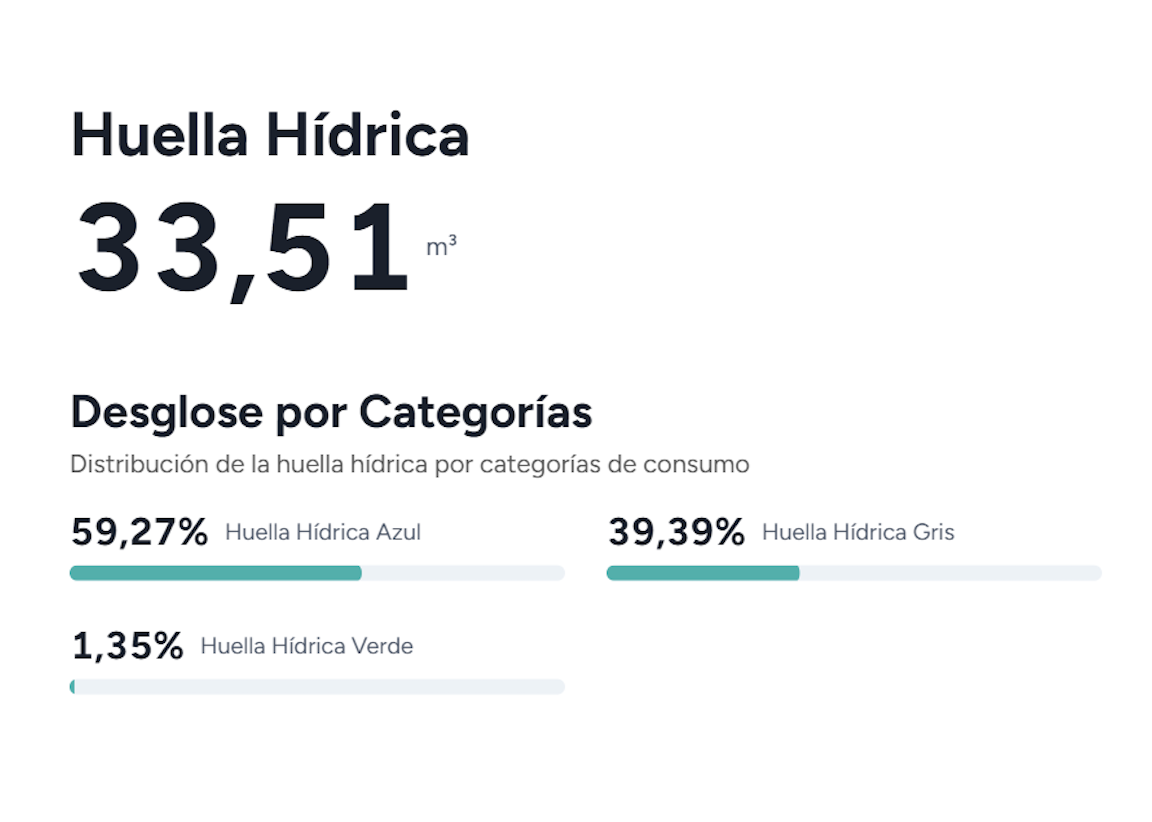
Managing water consumption with reliable data helps anticipate these costs: Manglai's water footprint solution lets you measure and reduce your company's water use.
Jaume Fontal
CPTO & Co-Founder
About the author
Jaume Fontal is a technology professional who currently serves as CPTO (Chief Product and Technology Officer) at Manglai, a company he co-founded in 2023. Before embarking on this project, he gained experience as Director of Technology and Product at Colvin and worked for over a decade at Softonic. At Manglai, he develops artificial intelligence-based solutions to help companies measure and reduce their carbon footprint.
Content
Companies that trust us

















Green finances
What sustainability data your bank will ask for before lending
Your bank will ask for four blocks of information: energy consumption and scope 1 and 2 emissions, the economic activity being financed and how it map ...

Green finances
What is sustainable finance and why should businesses care?
Sustainable finance has moved from the margins to the centre of how capital is allocated. For a business, it is no longer an ethical add-on: it increa ...

Green finances
Green finance: unlocking sustainable investment opportunities
Capital is moving towards companies that can prove their environmental performance, and away from those that cannot. Green finance is the channel thro ...
Guiding businesses towards net-zero emissions through AI-driven solutions.
Product & Pricing
What is Manglai
Features
SQAS
GLEC
GHG Protocol
ISO-14046
ISO-14064
Miteco certification
CSRD
CSDDD
Digital Product Passport
EINF
Prices
Customers
Partners
Solutions by role
Environmental consulting
ESG management solutions
Financial directors
General directors
HR managers
Operations directors
Quality and environment directors
Senior management
Solutions for investment funds
Supply chain managers
Sustainability managers
Transport responsible
© 2026 Manglai. All rights reserved