Greenhouse gases (GHGs) are gaseous compounds that absorb and re-emit infrared radiation, trapping heat in the atmosphere and raising the planet's average temperature. This effect is natural and essential for life, but human activity has intensified it: according to the IPCC, the global average temperature has risen by more than 1.1°C compared to the pre-industrial period.
What is the greenhouse effect?
The greenhouse effect is the process by which the Earth's surface, warmed by the Sun, emits infrared radiation that GHGs absorb and partly re-emit back towards the surface, rather than allowing it to escape into space. Thanks to this effect, the Earth's average temperature is around 15°C. The problem arises when the concentration of these gases increases and causes accelerated global warming.
Main greenhouse gases and their sources
Each gas has a different global warming potential (GWP), which measures how much heat it traps compared to CO2 over a given time horizon (typically 100 years). The main GHGs under the Kyoto Protocol are:
- Carbon dioxide (CO2): the reference GHG (GWP = 1). It comes mainly from the burning of fossil fuels, deforestation and cement production.
- Methane (CH4): much more potent than CO2 but with a shorter lifespan. It comes from livestock, rice cultivation, fossil fuel extraction and landfills.
- Nitrous oxide (N2O): linked to nitrogen fertilisers, combustion and certain industrial processes.
- Fluorinated gases: hydrofluorocarbons (HFCs), perfluorocarbons (PFCs), sulphur hexafluoride (SF6) and nitrogen trifluoride (NF3). Of synthetic origin, with very high GWP and long atmospheric lifespans.
Water vapour is also a potent GHG, but its concentration depends on temperature, meaning it acts as a feedback effect rather than a direct emission.
GWP values at 100 years (IPCC AR6)
According to the IPCC Sixth Assessment Report (AR6, 2021), the indicative GWP values at 100 years are:
- CO2: 1 (reference).
- Fossil methane: 29.8; biogenic methane: 27.0.
- Nitrous oxide (N2O): 273.
- Sulphur hexafluoride (SF6): 24,300.
- Nitrogen trifluoride (NF3): 17,400.
These coefficients allow different gases to be added together into a single figure of CO2 equivalent.
Impact on climate change
Excess GHGs intensify the greenhouse effect and cause consequences such as:
- Rise in global temperature: ice melt, sea level rise and more frequent extreme events (heatwaves, droughts, floods).
- Ocean acidification: CO2 absorbed by the sea affects corals, molluscs and plankton.
- Biodiversity loss and ecosystem disruption.
- Risks to human health from heat and air pollution.
How they are measured: inventories and scopes
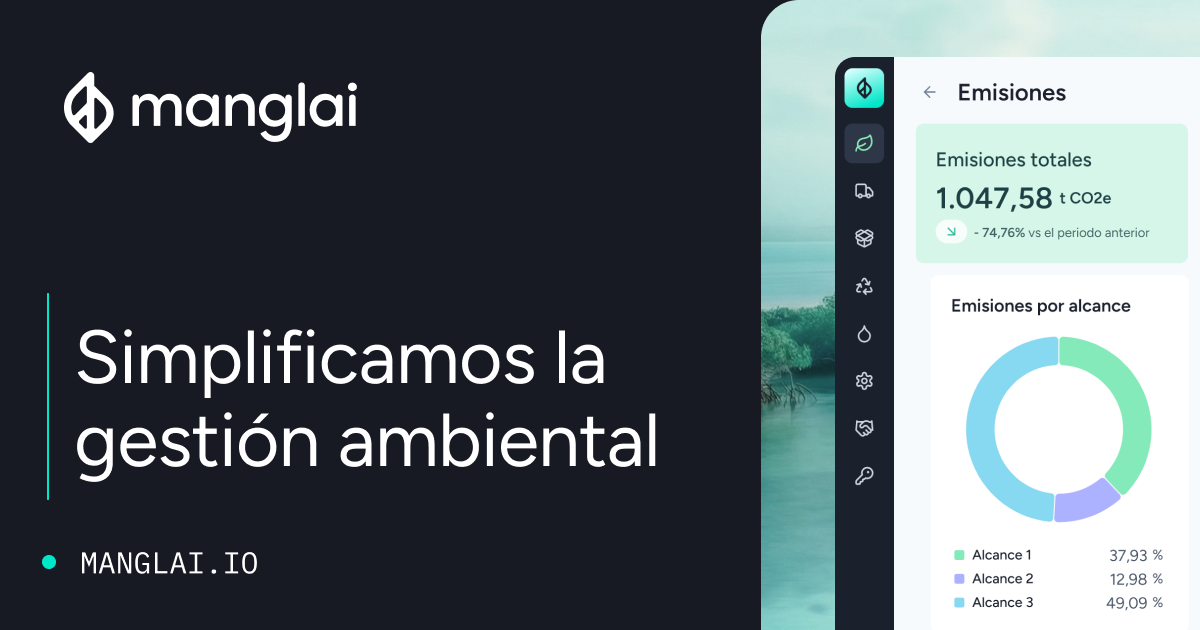
Corporate measurement is organised around the three scopes of the GHG Protocol:
- Scope 1: direct emissions from combustion and processes.
- Scope 2: purchased electricity, heat or steam.
- Scope 3: the rest of the value chain, which in many companies accounts for the largest share of the footprint.
From this, the carbon footprint and the carbon intensity per unit of product or revenue are calculated.
Legislation and carbon markets
- Paris Agreement: limit warming to well below 2°C and pursue efforts for 1.5°C, through Nationally Determined Contributions (NDCs).
- EU ETS: emissions trading market covering around 40% of EU emissions.
- CBAM: carbon border adjustment mechanism for imports such as steel, aluminium, fertilisers and cement, in full operation since 2026.
- Fluorinated Gas Regulation (EU) 2024/573: accelerates the progressive reduction of HFCs and restricts the use of SF6.
Rigorously measuring GHGs, reporting them under the GHG Protocol and ESRS E1 of the CSRD, and reducing them through clean energy, efficiency and carbon capture is essential to halt climate change. At Manglai we help companies measure their carbon footprint and prepare their sustainability information. Discover how Manglai can help you.
Companies that trust us

















Related terms
See all termsGreenhouse effect
The greenhouse effect is a natural phenomenon that keeps Earth warm enough for life, but human emissions have intensified it and are driving climate change.
Greenwashing
Greenwashing means projecting an eco-friendly image without the substance to back it. A guide to its forms, how to detect it, and the EU rules now closing in on misleading claims.
Green‑to‑Blue Ratio (G/B)
The Green-to-Blue Ratio shows how much a crop or process depends on rainfall versus extracted water; a higher value means less pressure on rivers and aquifers.
Guiding businesses towards net-zero emissions through AI-driven solutions.
Product & Pricing
What is Manglai
Features
SQAS
GLEC
GHG Protocol
ISO-14046
ISO-14064
Miteco certification
CSRD
CSDDD
Digital Product Passport
EINF
Prices
Customers
Partners
Solutions by role
Environmental consulting
ESG management solutions
Financial directors
General directors
HR managers
Operations directors
Quality and environment directors
Senior management
Solutions for investment funds
Supply chain managers
Sustainability managers
Transport responsible
© 2026 Manglai. All rights reserved