The Corporate Sustainability Report is the annex to the annual report, numbered (10180), that Peru's Securities Market Superintendency (SMV) requires from issuers whose securities are listed on the Public Registry of the Securities Market. It forms part of the Common Rules for Determining the Content of Informative Documents. It was introduced by Resolution SMV 033-2015-SMV/01, and the format in force today was approved by Superintendent Resolution 018-2020-SMV/02, published on 8 February 2020.
Who must file it
It applies to issuers and legal entities listed on the Public Registry of the Securities Market that are required to file an annual report. There is one express exception: companies in the Alternative Securities Market (MAV) are not required to file the Corporate Sustainability Report, following the amendment to article 18 of the MAV Regulations introduced by Resolution SMV 013-2023-SMV/01. Those companies must, however, include the Report on Compliance with the Code of Good Corporate Governance for Peruvian Companies.
How often it is filed
It is annual and travels with the annual report. The Rules on the Preparation, Presentation and Disclosure of Financial Statements, Annual Reports and Management Reports, approved by Resolution SMV 013-2023-SMV/01 of 6 December 2023, set 31 March each year as the deadline for filing and disclosing the annual report, covering the financial year ended on the previous 31 December. For collective fund management companies the deadline is 30 April. The annual report must be approved by the shareholders' meeting or equivalent body and, for issuers, is filed with the SMV on the date of that approval.
What it contains
The report is a structured questionnaire of closed yes or no questions, an explanation field and quantitative data tables. It is organised in three sections:
I. Environment and climate change
- Whether the company has an environmental policy or management system, how it was approved, and whether it addresses climate-related impacts.
- Administrative sanctioning procedures for breaches of environmental rules during the year, and their status.
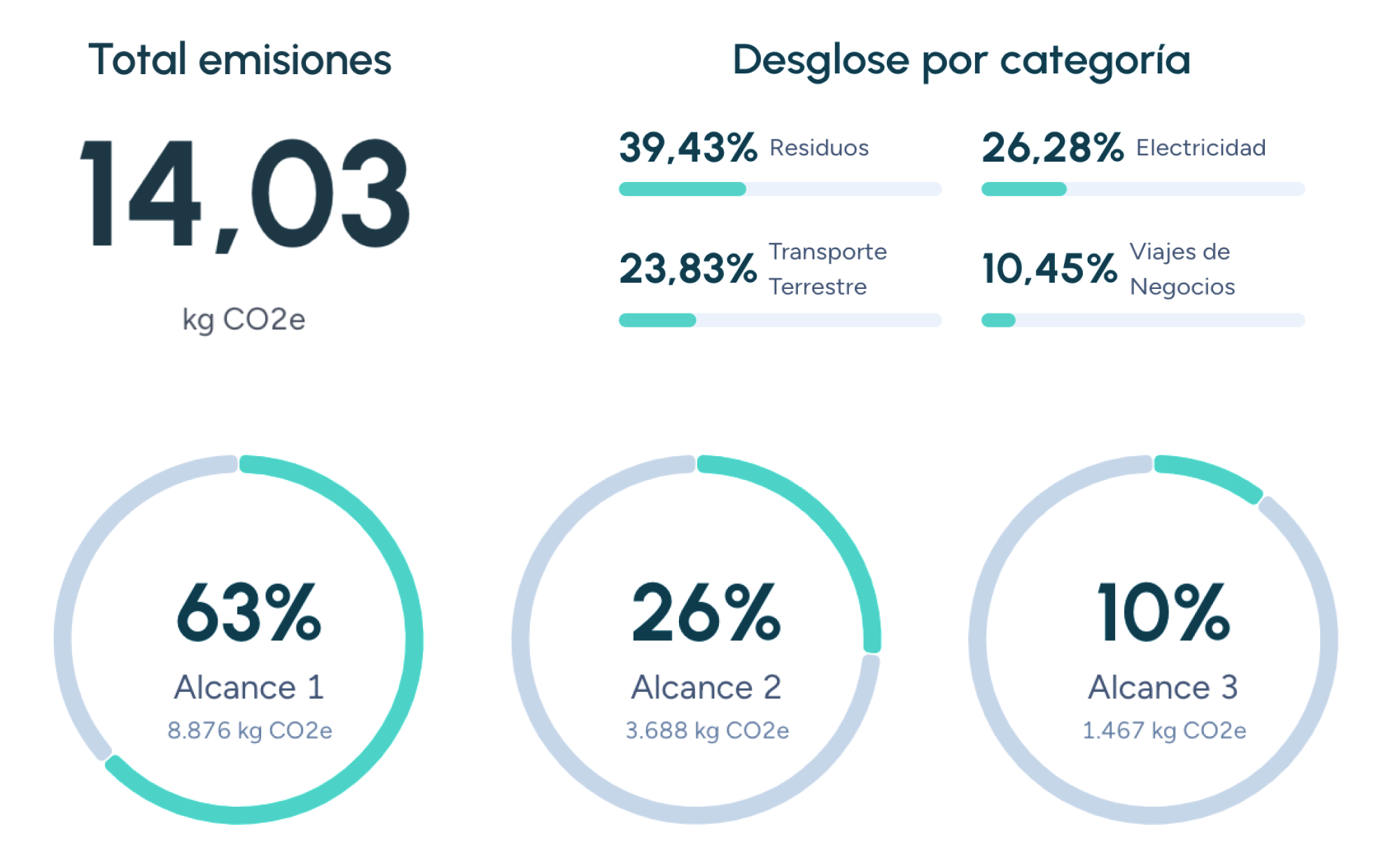
- Measurement of greenhouse gas emissions, broken down by scope 1, scope 2 and scope 3, the third-party document evidencing that measurement, and reduction targets.
- Total water consumption in cubic metres, water footprint, effluent management and reduction targets.
- Total energy consumption in kWh and reduction targets.
- Solid waste generated in tonnes, distinguishing hazardous from non-hazardous waste under annexes III and V of the regulations to Legislative Decree 1278, and recovery targets.
II. Social
Identification of risks and opportunities in relation to stakeholders (employees, suppliers, shareholders, investors, authorities, customers and the community), the action plan, a results report seen by the board, and public reporting of progress.
III. Supplementary information
International corporate sustainability certifications, with a verification link, and whether the company produces a sustainability report other than this annex, with its name and link.
Where this is heading: IFRS S1 and S2
The 2020 format remains in force, but the SMV has already signalled the direction of travel. In its Early Agenda 2026, approved by Superintendent Resolution 009-2026-SMV/02 and publicised on 5 February 2026, the Superintendency recognises the need to align the annual report with internationally recognised standards that make sustainability and climate information comparable across companies and markets, specifically IFRS S1 and IFRS S2 from the ISSB, in line with IOSCO and OECD recommendations.
This is a regulatory agenda item, not a published rule: no resolution replacing the report exists yet. For a Peruvian issuer the practical reading is clear. The current questionnaire already asks for emissions by scope, water, energy and waste with figures; IFRS S1 and S2 will ask for the same with more traceability, governance and analysis of risks and opportunities. Organising the source data now is work that will not be wasted.
Frequently asked questions
Is the Corporate Sustainability Report mandatory in Peru?
Yes, for issuers listed on the Public Registry of the Securities Market that are required to file an annual report. Companies in the Alternative Securities Market are exempt.
When is it filed?
With the annual report, whose filing and disclosure deadline is 31 March each year, covering the previous financial year.
Does it require external assurance?
The format does not impose independent assurance over the whole report, but it does ask for the third-party document evidencing the measurement of GHG emissions and for the name of the reviewing firm, if any.
Does it replace a GRI or integrated sustainability report?
No. Section III expressly asks whether the company has a sustainability report other than this annex and requests the link, so the two coexist.
If you need to reach 31 March with emissions, water, energy and waste figures reconciled and traceable back to source documents, start with the carbon footprint solution.
Manglai Newsletter
Regulatory updates and product news, once a month.
Companies that trust us













Related terms
See all termsDouble Materiality and CSRD
Double materiality is the principle that combines a company's impact on the environment with the effect of sustainability on its finances. It is the basis of the CSRD and the ESRS.
ESG Due Diligence Requirements
An overview of ESG due diligence obligations: what they cover, the EU rules after the Omnibus I simplification, and the international standards companies use to comply.
ESG criteria
A set of environmental, social and governance criteria used by investors, regulators and customers to assess a company's sustainable and responsible performance.