Environmental sustainability indicators (KPIs) are quantitative metrics that enable an organisation to evaluate its environmental performance in relation to its activities, products or services. They provide information on the use of natural resources, greenhouse gas (GHG) emissions, waste generation and other key sustainability dimensions.
Types of KPIs in carbon footprint measurement
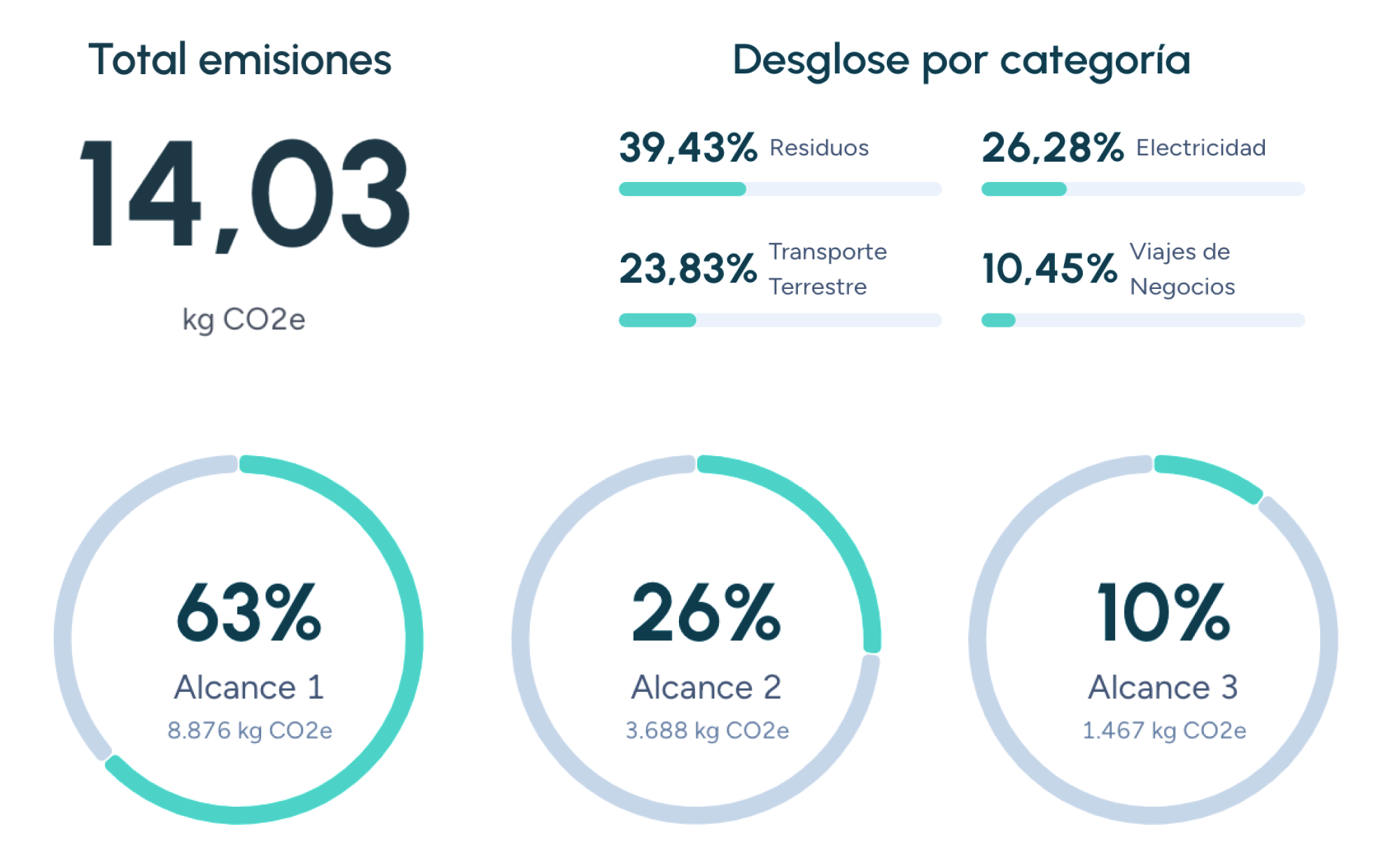
The choice of indicators depends on each organisation and its objectives. In measuring the carbon footprint, the most common ones are organised by scope.
Direct emissions (Scope 1)
- CO₂ equivalent emissions from fossil fuel consumption (natural gas, propane, petrol, diesel).
- Emissions from industrial processes.
- Emissions of other GHGs (methane, nitrous oxide, etc.).
See the detail in Scope 1 emissions.
Indirect energy emissions (Scope 2)
- Electricity consumption (kWh).
- Emissions associated with electricity consumption based on the emission factor.
- Thermal energy consumption (steam, hot water) and associated emissions.
More information in Scope 2 emissions.
Indirect value chain emissions (Scope 3)
- Emissions from product transport and distribution.
- Emissions from business travel.
- Emissions from product use and end of life.
- Emissions from waste management.
These are covered in Scope 3 emissions.
Sector-specific examples
KPIs are adapted to each activity:
- Manufacturing: carbon intensity per unit of product, water consumption per unit and percentage of recycled waste.
- Energy sector: emissions per kWh generated, percentage of renewable energy in the mix and installation efficiency.
- Transport: emissions per kilometre travelled, fuel consumption and percentage of electric vehicles in the fleet, aligned with sustainable transport.
- Construction: carbon footprint of materials, building energy consumption and management of construction and demolition waste.
Benefits of using environmental KPIs
- Improved environmental efficiency and reduced operating costs.
- Compliance with environmental regulations and access to incentives.
- Enhanced corporate image and brand reputation.
- Greater access to responsible investment and financing.
- Stronger relationships with stakeholders.
Why KPIs are key to the carbon footprint
Indicators are the foundation for managing the carbon footprint, as they enable:
- Quantifying emissions using recognised methodologies such as the GHG Protocol and ISO 14064.
- Identifying areas for improvement and prioritising the most effective reduction measures.
- Setting SMART objectives (specific, measurable, achievable, relevant and time-bound).
- Monitoring progress through continuous monitoring and improvement.
- Communicating performance with verifiable data, in line with the transparency required by frameworks such as ESRS E1.
At Manglai we help companies define and measure their sustainability indicators, calculate their carbon footprint and prepare their sustainability information. Discover how Manglai can help you.
Companies that trust us















Related terms
See all termsEnvironmental sustainability indicators (KPIs)
Environmental sustainability indicators (KPIs) are quantitative metrics that track resource use, greenhouse gas emissions and waste, helping organisations measure and manage their environmental impact.
Financed emissions (PCAF)
Greenhouse gas emissions associated with a financial institution's loans and investments, falling under Scope 3 and measured with the PCAF standard.
Fugitive emissions
Fugitive emissions are unintended releases of greenhouse gases, such as refrigerant or natural gas leaks, accounted for under Scope 1 of the GHG Protocol.
Guiding businesses towards net-zero emissions through AI-driven solutions.
Product & Pricing
What is Manglai
Features
SQAS
GLEC
GHG Protocol
ISO-14046
ISO-14064
Miteco certification
CSRD
CSDDD
Digital Product Passport
EINF
Prices
Customers
Partners
Solutions by role
Environmental consulting
ESG management solutions
Financial directors
General directors
HR managers
Operations directors
Quality and environment directors
Senior management
Solutions for investment funds
Supply chain managers
Sustainability managers
Transport responsible
© 2026 Manglai. All rights reserved