Value chain, a concept coined by Michael Porter in 1985, describes all the activities a company carries out to develop a product or service, from its conception through to its arrival with the end consumer and even beyond.
These activities fall into two broad categories:
- Primary activities: directly related to the physical creation of the product, its sale, distribution and after-sales support.
- Inbound logistics: receiving, storing and managing raw materials.
- Operations: transforming raw materials into the final product.
- Outbound logistics: distributing the finished product to customers.
- Marketing and sales: activities to promote and sell the product.
- After-sales service: technical support, repairs and returns management.
- Support activities: not directly related to production, but essential for primary activities to run efficiently.
- Firm infrastructure: administration, planning, finance, etc.
- Human resource management: recruitment, training and staff development.
- Technology development: research and development of new technologies and processes.
- Procurement: sourcing raw materials, supplies and other resources.
In sustainability, value chain analysis makes it possible to distinguish upstream stages (towards suppliers) from downstream stages (towards the customer), which is key to managing environmental impacts.
Value chain and the carbon footprint
The relationship between the value chain and the carbon footprint is intrinsic. Every link, from sourcing raw materials to transport, manufacturing, use and end-of-life, generates greenhouse gas (GHG) emissions, expressed in CO2 equivalent.
Emission scopes
Understanding a company's environmental impact requires analysing its carbon footprint across the entire value chain. The Greenhouse Gas Protocol (GHG Protocol), the international standard for emissions accounting, classifies them into three scopes:
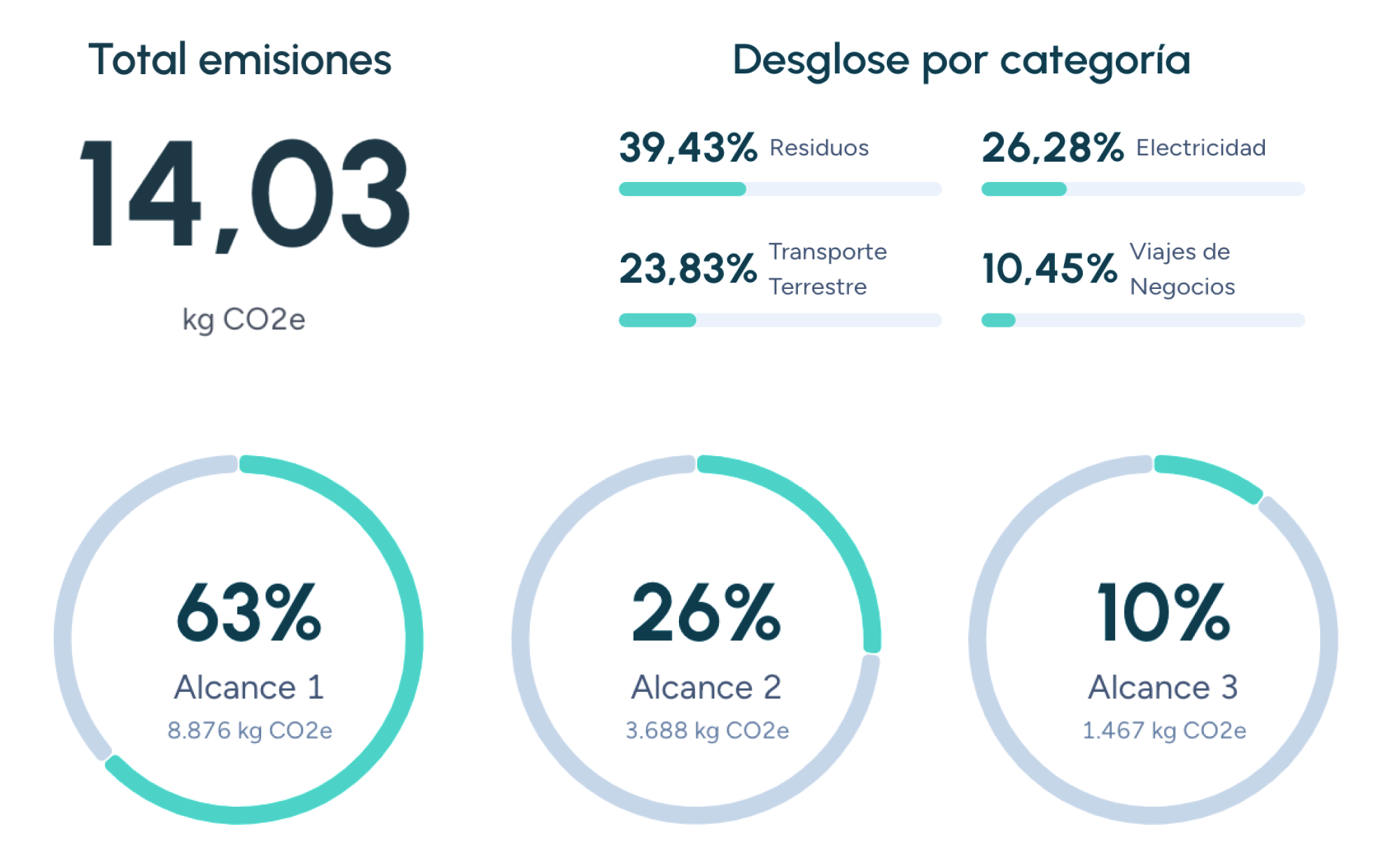
- Scope 1 (direct emissions): from sources owned or controlled by the company, such as burning fossil fuels at its own facilities.
- Scope 2 (indirect energy emissions): associated with electricity, heat or steam the company purchases from third parties.
- Scope 3 (other indirect emissions): covers the rest of the value chain's emissions (suppliers, transport and distribution, customer use of the product and end-of-life management). In many companies, this is by far the most significant scope.
Benefits of analysing the carbon footprint across the value chain
Identifying and quantifying emissions at each stage offers multiple benefits:
- Spotting reduction opportunities: locating the critical points where the largest emissions occur and prioritising the most effective actions.
- Improving efficiency and cutting costs: reducing emissions usually goes hand in hand with process optimisation.
- Strengthening brand and reputation: demonstrating a real, measured commitment avoids greenwashing and builds trust.
- Accessing new business opportunities: demand for sustainable products and services keeps growing.
- Complying with regulation: disclosure and due diligence requirements on sustainability are increasing, and involve working on the sustainable supply chain and its traceability.
At Manglai we help companies measure the carbon footprint of their entire value chain, including Scope 3, and prepare their sustainability information. Discover how Manglai can help you.
Companies that trust us














Related terms
See all termsValue Chain Traceability
Value chain traceability makes it possible to track every stage of a product's life cycle, from raw material to end of life. It is key to measuring scope 3 emissions and complying with due diligence regulations.
Waste emissions
Waste emissions are the greenhouse gases released across the collection, treatment and disposal of waste.
Water Footprint
The water footprint is a sustainability indicator that quantifies the volume of freshwater used, directly and indirectly, to produce goods and services, split into blue, green and grey components.
Guiding businesses towards net-zero emissions through AI-driven solutions.
Product & Pricing
What is Manglai
Features
SQAS
GLEC
GHG Protocol
ISO-14046
ISO-14064
Miteco certification
CSRD
CSDDD
Digital Product Passport
EINF
Prices
Customers
Partners
Solutions by role
Environmental consulting
ESG management solutions
Financial directors
General directors
HR managers
Operations directors
Quality and environment directors
Senior management
Solutions for investment funds
Supply chain managers
Sustainability managers
Transport responsible
© 2026 Manglai. All rights reserved