The European Sustainability Reporting Standards (ESRS) are the set of standards that implement the Corporate Sustainability Reporting Directive (CSRD) and specify what information a company must disclose about its environmental, social and governance (ESG) impacts, risks and opportunities. They were developed by EFRAG (the technical adviser to the European Commission) and adopted through Commission Delegated Regulation (EU) 2023/2772, revised in July 2026. Their aim is to make sustainability information comparable, reliable and useful for investors, regulators and other stakeholders.
This entry serves as a general guide to the ESRS. From here you can access each specific standard in the glossary.
How are the ESRS structured? The 12 standards
The ESRS consist of 12 standards organised in three blocks, an architecture the 2026 revision keeps unchanged:
Cross-cutting standards (2)
These apply to any company and all sustainability topics:
- ESRS 1: General Requirements: sets out the architecture, fundamental concepts (including double materiality) and how information is prepared and presented. It contains no specific disclosures.
- ESRS 2: General Disclosures: establishes mandatory general disclosures (governance, strategy, management of impacts, risks and opportunities, and metrics and targets). It is mandatory regardless of the outcome of the materiality assessment.
Environmental thematic standards (5)
- ESRS E1: Climate Change
- ESRS E2: Pollution
- ESRS E3: Water and Marine Resources
- ESRS E4: Biodiversity and Ecosystems
- ESRS E5: Resource Use and Circular Economy
Social thematic standards (4) and governance (1)
- ESRS S1: Own Workforce
- ESRS S2: Workers in the Value Chain
- ESRS S3: Affected Communities
- ESRS S4: Consumers and End-users
- ESRS G1: Business Conduct
Except for ESRS 2, which is always mandatory, the thematic standards apply depending on the outcome of the double materiality assessment: companies only report in detail on topics that are material.
The role of double materiality
The ESRS are grounded in the principle of double materiality: a company must analyse both its impact on the environment (impact materiality) and how sustainability issues affect its financial position (financial materiality). This assessment determines the content of the report. The 2026 revision keeps double materiality but allows a top-down approach that starts from the business model.
Which companies do the ESRS apply to?
The ESRS apply to companies required to report under the CSRD. Following Directive (EU) 2026/470 (Omnibus I), published in the Official Journal of the EU on 26 February 2026 and in force since 18 March 2026, the scope of application has been significantly reduced: in general, only companies exceeding 1,000 employees and EUR 450 million in net turnover (both criteria at once) are required to report. Before this reform the threshold was much lower, from 250 employees. Non-EU parent companies fall in scope when they generate more than EUR 450 million of turnover in the EU and have an EU subsidiary or branch above EUR 200 million.
The first report under the new framework covers financial years beginning on or after 1 January 2027, published in 2028, and member states must transpose the directive in March 2027. One common misreading is worth correcting: first-wave companies that now fall below the new thresholds keep reporting financial years 2025 and 2026 unless their member state explicitly exempts them.
For SMEs outside the obligation, on 3 July 2026 the Commission adopted a much simpler voluntary standard based on the VSME, which also acts as a cap on the information large companies can request from their value chain.
Revised ESRS: what changed in July 2026
The European Commission adopted the delegated act containing the revised ESRS on 3 July 2026. The simplification cuts more than 60% of mandatory data points and more than 70% of all data points, removes voluntary disclosures, strengthens the fair presentation requirement and adds flexibility both to the materiality assessment and to the use of estimates in the value chain, with an undue cost or effort relief.
The revised standards apply to financial years beginning on or after 1 January 2027, with early application possible for financial year 2026, and the delegated act is subject to the scrutiny period of the European Parliament and the Council. On assurance, Directive (EU) 2026/470 fixed limited assurance as the definitive level and removed the previously planned move to reasonable assurance.
Implications for the carbon footprint
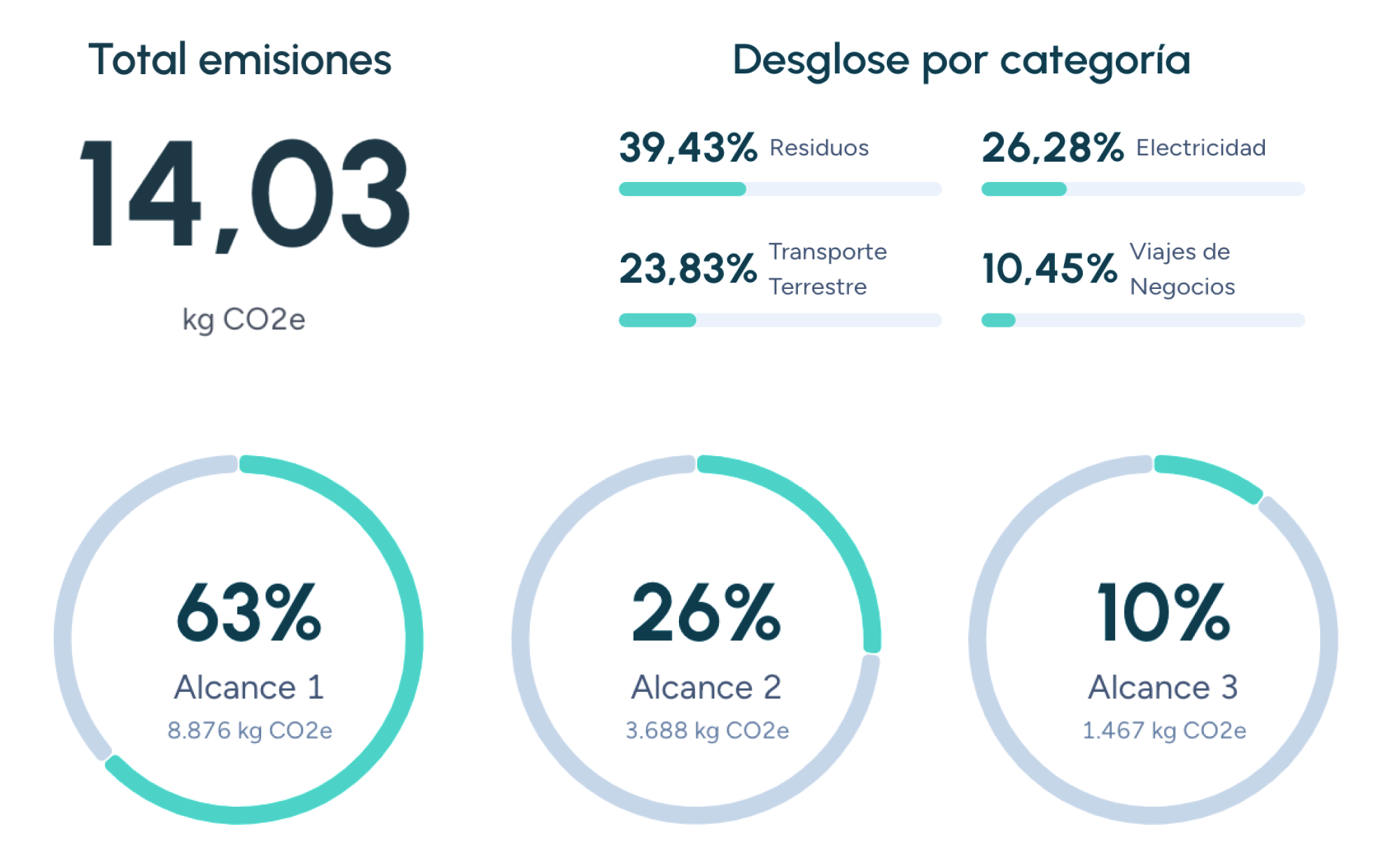
A significant portion of reporting effort is concentrated on climate. ESRS E1 requires disclosure of greenhouse gas emissions by scope: Scope 1 (direct emissions), Scope 2 (energy) and Scope 3 (value chain), typically following the GHG Protocol, as well as reduction targets and transition plans.
How to prepare
- Conduct the double materiality assessment to narrow down the topics to report on.
- Measure the carbon footprint across all three scopes.
- Identify data gaps and establish collection and control processes.
- Prepare information for independent verification.
At Manglai we help companies measure their carbon footprint and structure the information required by the ESRS and CSRD. Discover how Manglai can help you.
Companies that trust us















Related terms
See all termsEuropean Sustainability Reporting Standards (ESRS)
The European Sustainability Reporting Standards (ESRS) define the sustainability information companies report under the CSRD. A simplified revised set is on its way for financial years from 2027.
FACPCE Technical Resolution 60 (Argentina)
Technical Resolution 60, standards applicable to the preparation of sustainability information, is the FACPCE standard that sets which frameworks are acceptable in Argentina for preparing a sustainability report: the GRI Standards or the ISSB's IFRS Sustainability Disclosure Standards. It fully replaces RT 36 on social reporting. Professional councils publish its effective date as financial years beginning on or after 1 January 2027, and each provincial council approves it and brings it into force in its own jurisdiction.
FASB
FASB sets US GAAP. It does not set emissions disclosure rules, but its work on environmental credits is relevant to companies pursuing climate goals.
Guiding businesses towards net-zero emissions through AI-driven solutions.
Product & Pricing
What is Manglai
Features
SQAS
GLEC
GHG Protocol
ISO-14046
ISO-14064
Miteco certification
CSRD
CSDDD
Digital Product Passport
EINF
Prices
Customers
Partners
Solutions by role
Environmental consulting
ESG management solutions
Financial directors
General directors
HR managers
Operations directors
Quality and environment directors
Senior management
Solutions for investment funds
Supply chain managers
Sustainability managers
Transport responsible
© 2026 Manglai. All rights reserved